The Architecture of Silence
There is a specific weight to the space where a branch once reached toward the sun, before the winter stripped it back to a skeletal reach. I am thinking of the coat rack in my childhood hallway, the one that stood empty for three years after my father stopped coming home. It was not just a piece of wood; it was a monument to the shape of his shoulders, the heavy wool of his winter coat, and the way he would hang his hat with a rhythmic, predictable thud. When the coat was gone, the rack didn’t just hold air; it held the memory of the weight it used to bear. We often mistake emptiness for a lack of substance, but absence is a physical presence. It is the negative space that defines the object, the hollow that proves the existence of what was once held. If you look long enough at the space between things, you realize that nothing is ever truly vacant. What is it that we are actually looking at when we stare into the hollows of a life?
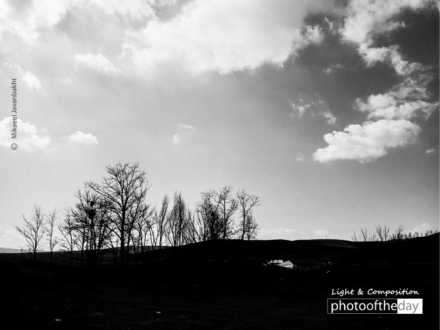
Mikaeel Javanbakht has taken this beautiful image titled Black Trees. The stark silhouettes against the horizon remind me that even in their bareness, these forms carry the history of every leaf they once held. Does the silence of these trees speak to you of loss, or of a quiet, waiting endurance?