The Right to Play
We often mistake the city for a collection of infrastructure—roads, pipes, and zoning laws. But the true urban fabric is woven from the informal claims people make upon public space. When a child claims a patch of pavement for a game, they are performing a radical act of ownership. They are asserting that the city is not merely a corridor for transit or a site for commerce, but a living room for the community. In many planned environments, we see the systematic erosion of these ‘third spaces,’ replaced by sterile surfaces that discourage lingering. Yet, resilience persists in the cracks. The ability to transform a gray, rain-slicked corner into a stadium is a testament to the human need for agency. It asks us to consider the geography of childhood: where are the children permitted to exist without the pressure to consume or the mandate to move along? Who owns the silence of a street when the rain falls, and who is allowed to break it?
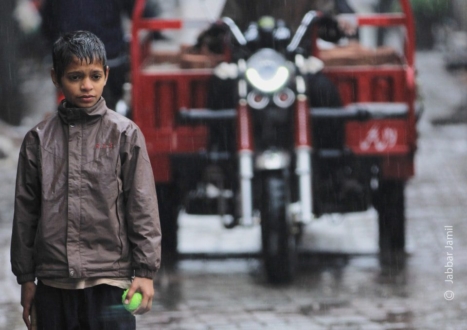
Jabbar Jamil has taken this beautiful image titled Rainy Cricket. It serves as a quiet reminder of how we inhabit our shared environments, even when the weather suggests we should be elsewhere. Does this scene reflect a city that welcomes its youngest citizens, or one that merely tolerates them?