The Geography of the Table
We often mistake the city for its skyline, for the grand architecture of power and commerce that dominates the horizon. Yet, the true city is found in the quiet, intimate corners where labor meets leisure. A meal is never just sustenance; it is a social document. It tells us who has the time to sit, who has the means to consume, and who is tucked away in the kitchen, transforming raw ingredients into a curated experience. Every plate served in a public house is a negotiation of space and status. When we look at the rituals of dining, we are really looking at the invisible lines of class that define our neighborhoods. Who is invited to this table, and what does the price of admission say about the community surrounding it? The city is built on these small, daily transactions of hospitality and exclusion, yet we rarely pause to ask who is really being served by the spaces we inhabit.
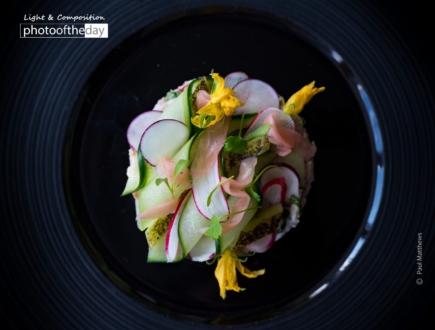
Paul Matthews has captured this quiet moment in his image titled The Kings Head Crab Salad. It serves as a reminder that even a simple dish is a product of a specific place and a particular social order. Does this plate represent a space that belongs to everyone, or is it a sanctuary for the few?