The Weight of Crumbs
The taste of dry flour still clings to the back of my throat, a ghost of a meal that ended too soon. I remember the sensation of grit against my teeth, the way a single piece of bread could feel like a heavy, precious stone in the palm of a small hand. It is not the hunger that stays with you, but the silence that follows the last bite—a hollow, aching quiet that settles in the belly like cold tea. We learn early that some things are meant to be rationed, measured out in tiny, jagged pieces until there is nothing left but the memory of salt and the rough texture of a crust against the skin. The body remembers the scarcity long after the table is cleared, storing the need in the tightness of a shoulder or the way we guard our plates. When did we decide that survival should feel so heavy, and why does the smallest portion often carry the most weight? Does the hunger ever truly leave the marrow of our bones?
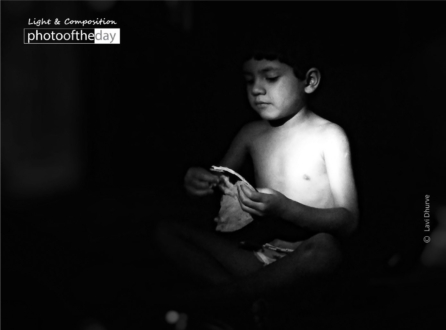
Lavi Dhurve has captured this quiet, visceral truth in the image titled Half Chapati. It reminds me that even in the smallest fragment of a meal, there is a lifetime of endurance held in the hands. Can you feel the gravity of this moment?