The Echo of Footsteps
In the nineteenth century, the physicist Ernst Mach suggested that the inertia of every object is determined by the presence of all other matter in the universe. It is a dizzying thought: that a stone sitting in a quiet garden is held in place by the distant stars, and that we, in our own small movements, are tethered to the vast, invisible architecture of everything else. We walk through our days assuming we are solitary actors, yet we are constantly brushing against the ghosts of those who walked before us. A promenade is never just a path; it is a ledger of arrivals and departures, a place where the air itself seems to thicken with the memory of conversations long since finished. We return to these spaces to find a sense of continuity, a way to anchor ourselves when the present feels too thin or too fast. If the ground beneath us remembers the weight of a thousand strangers, does it also hold a piece of our own quiet passing? What remains when the crowd finally thins and the shadows grow long?
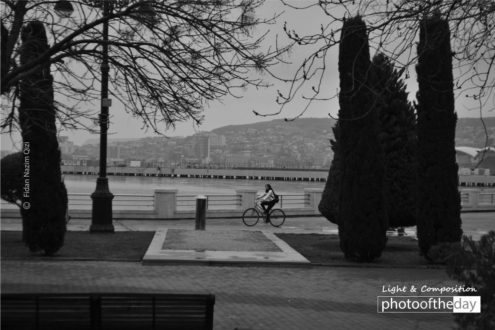
Fidan Nazim Qizi has captured this sense of enduring history in her work titled Baku Boulevard. She invites us to stand still for a moment and listen to the silence of a place that has seen so much. Does this stillness feel like a weight to you, or a relief?