The Geometry of Flow
There is a quiet, persistent intelligence in the way water negotiates its path. We often think of it as formless, a shapeless traveler that simply yields to the contours of the earth. Yet, if you watch a stream or a pool long enough, you begin to see a different logic. It is not merely yielding; it is negotiating. It finds the path of least resistance, yes, but in doing so, it creates intricate, repeating patterns that mimic the very structures of our own nervous systems. We are, after all, mostly water ourselves, carrying these same currents within our veins. When we look at the surface of a pond, we are often looking at a mirror, but perhaps we should be looking at a map of our own internal motion. The way a ripple travels, the way light catches a curve—it is a language of constant, fluid adjustment. It suggests that stability is not a fixed state, but a continuous, rhythmic dance. If we stopped trying to stand still, would we finally understand how to move?
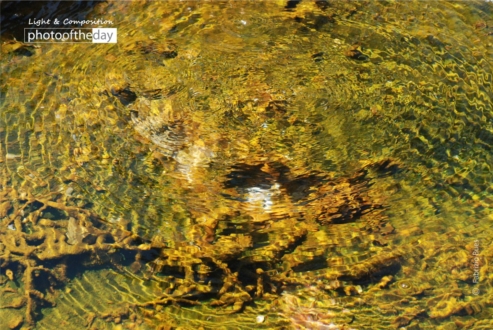
Fabrizio Bues has captured this fluidity in his work titled Hypnotic Water. It reminds me that even the most chaotic elements are governed by a hidden, elegant order. Does the water look like it is resting to you, or is it merely holding its breath?