The Architecture of a Breath
In the study of ancient stone, we often look for the grand design—the way the spire meets the clouds or how the foundation anchors itself against the shifting earth. Yet, there is a quieter architecture that persists long after the mortar has crumbled. It is found in the lines etched into a human face, the geography of a life lived in the open air. We spend so much of our time trying to build things that will outlast us, forgetting that the most enduring monuments are the ones that breathe, move, and carry a melody into the wind. A song played on a simple reed instrument does not need to reach the rafters of a cathedral to be heard by the universe; it only needs to be true to the person playing it. When we stop to watch someone simply existing, unburdened by the need to be seen, we catch a glimpse of a grace that no architect could ever draft. What remains of us when the music finally fades into the mist?
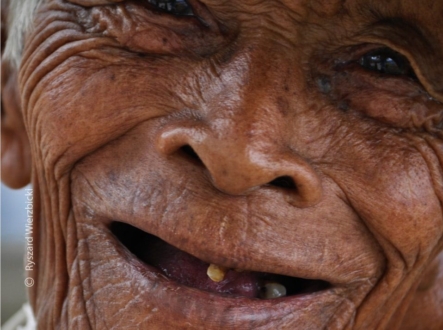
Ryszard Wierzbicki has captured this quiet grace in his beautiful image titled Piper’s Smile. It is a gentle reminder that the most profound stories are often told in the briefest of pauses. Does this face not feel like a place you have visited before?