The Architecture of Devotion
We often mistake the city for its hard surfaces—the concrete, the glass, the grid of streets that dictate our movement. But the true geography of an urban space is found in the pockets of resistance where people gather to reclaim their humanity. These are the thresholds where the rigid lines of the municipality blur into the fluid, messy, and sacred rhythms of collective life. When we step inside a space dedicated to faith or song, we are witnessing a temporary suspension of the social hierarchy. Here, the status of the individual is stripped away, replaced by a shared frequency. It is a reminder that a city is not merely a collection of buildings, but a living document of our need to belong to something larger than our own private struggles. Who is permitted to occupy the center of this space, and who is relegated to the periphery? Does the city provide enough room for the quiet, unscripted voices that keep our shared culture breathing?
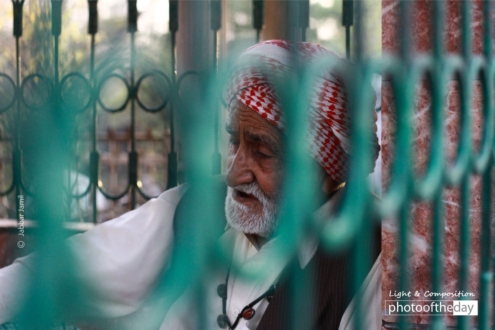
Jabbar Jamil has captured this profound sense of communal resonance in his image titled Listen What I Sing. It serves as a stark reminder of how we carve out sanctuaries within the dense fabric of our urban environments. Does this space feel like a refuge to you, or a place of exclusion?