The Geography of Transit
We often mistake the city for its architecture, forgetting that the true document of urban life is found in the movement between points. A road is never just a strip of asphalt; it is a social contract, a negotiated space where the individual asserts their presence against the vastness of the environment. In the quiet hours of the morning, the rhythm of a commute reveals the underlying structure of a society. Who has the luxury of stillness, and who must be in motion to sustain the gears of the local economy? The path taken—or the path forced upon us—tells a story of access, infrastructure, and the invisible borders that define our daily reach. When we observe someone traversing a landscape, we are witnessing the physical manifestation of their agency within a system that was built long before they arrived. We must ask ourselves: is the infrastructure designed to facilitate the lives of those who use it, or are the people merely incidental to the design? Who is the city actually for, and what happens when we finally stop to watch who is passing through?
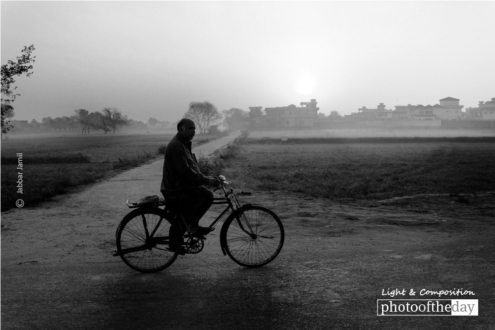
Jabbar Jamil has captured this quiet persistence in his image titled A Cyclist. It serves as a reminder that every journey is a social act, etched into the geography of the land. Does this movement feel like a choice, or a necessity to you?