The Architecture of Rest
In the nineteenth century, the city was often described as a machine—a clockwork of gears, steam, and relentless motion. We are taught to measure our worth by the speed of our output, as if we were merely extensions of the iron and glass that surround us. Yet, there is a quiet, subversive act that happens when the machine is at its loudest: the decision to stop. It is not an act of laziness, but one of profound reclamation. To fold oneself into a small, private space when the world demands constant visibility is to assert that the human spirit has its own rhythm, one that does not sync with the ticking of a public clock. We spend our lives building walls and schedules, but the most honest architecture is the one we create with our own bodies when we simply need to close our eyes. Is it possible that we only truly belong to ourselves in those stolen moments of stillness, when the noise of the world finally loses its grip?
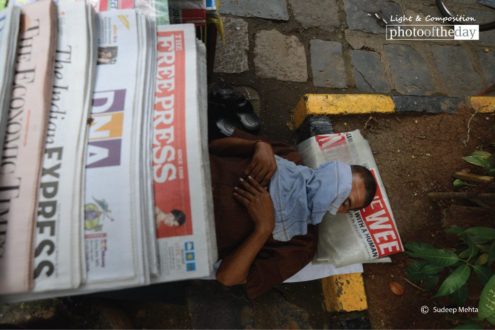
Sudeep Mehta has captured this exact surrender in his work titled Time for a Short Nap. It is a gentle reminder that even in the most crowded places, we are allowed to find our own quiet. Does this scene make you want to slow down, too?