The Architecture of Exclusion
We build glass walls to contain the wild, turning the untamable into a spectacle for the price of a ticket. In our modern urban centers, we curate nature as if it were a museum exhibit, stripping away the messiness of the ecosystem to present a sanitized, glowing version of life. It is a familiar pattern: we designate specific zones for wonder, effectively deciding which parts of the natural world are permitted to exist within the city’s borders and which are pushed to the margins. By framing these creatures in artificial light, we distance ourselves from the reality of their existence, turning a living, breathing organism into a static object of consumption. We are comfortable with the beauty we can control, but we are often blind to the systems of enclosure that define our public spaces. When we look at these curated environments, we must ask ourselves what we have lost by choosing to observe from behind the glass rather than existing within the wild. Who is the city really for, and what are we hiding when we frame the world so neatly?
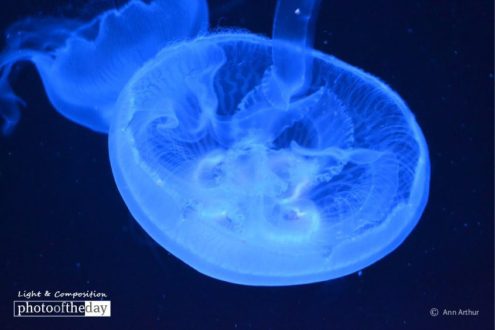
Ann Arthur has captured this tension in her image titled The Moon Jelly. She invites us to look closely at the boundaries we construct between ourselves and the natural world. Does this view make you feel closer to nature, or more aware of the glass between us?