The Weight of Stone
Why do we build monuments that outlive our own memories? We stack stone upon stone, carving our ambitions into the earth, hoping to anchor ourselves against the relentless tide of time. There is a strange arrogance in our architecture, a belief that if we make a wall thick enough or a tower tall enough, we might finally trap a moment of history and keep it from slipping away. Yet, as the centuries pass, the stone begins to forget the hands that shaped it. The fortress that once stood as a symbol of power eventually becomes a silent witness to the fleeting nature of those who walk beneath its shadow. We are all just passing through the halls of structures that were never meant to hold us, only to watch us go. If the walls could speak, would they tell us of the kings who claimed them, or would they simply hum the quiet song of the wind that erodes them?
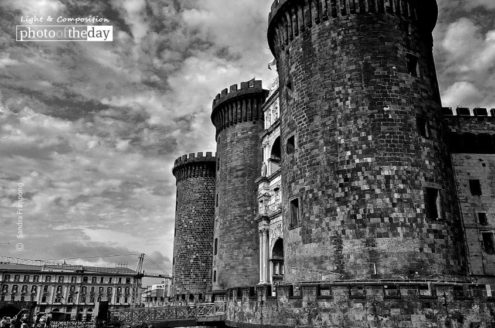
Sandra Frimpong has captured this sense of enduring presence in her photograph titled Castel Nuovo. It stands as a reminder of how we attempt to solidify our legacy against the vastness of the sky. Does the permanence of stone make our own lives feel more significant, or merely more temporary?