The Geography of Resilience
We often mistake the periphery for the empty. When we look at landscapes that exist outside the dense grid of the metropolis, we tend to see them as voids—places where nothing happens, where no one lives, and where history has stalled. But this is a failure of our urban imagination. Every inch of land, no matter how arid or remote, is a site of intense negotiation. Life here is not passive; it is a constant, quiet struggle against the constraints of the environment. It is a testament to the fact that survival is a form of labor. When we categorize these spaces as merely ‘wild’ or ‘natural,’ we erase the human geography of those who have adapted to these conditions for generations. We ignore the invisible lines of ownership, migration, and endurance that define the edges of our world. If we stop viewing the land as a backdrop and start seeing it as a document of persistence, we might finally understand the true cost of occupying a space. Who is allowed to thrive in the margins, and who is pushed to the edge?
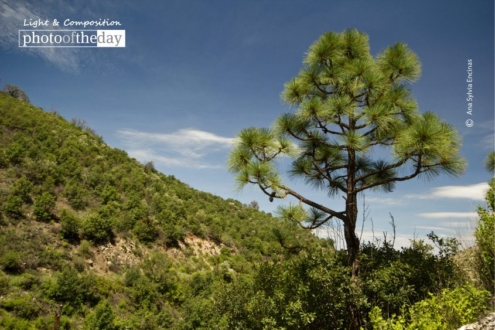
Ana Sylvia Encinas has taken this beautiful image titled Not just Cacti in Sonora. It serves as a reminder that even the most rugged terrain is a living, breathing social document. Does this landscape feel like a home to you, or a boundary?