The Architecture of Holding On
We often speak of independence as the ultimate human achievement, a solitary peak to be climbed. Yet, if we look closely at the earliest chapters of any life, we find that survival is rarely a solo act. It is a physical negotiation, a constant, rhythmic adjustment of weight and warmth. There is a specific geometry to being held—the way a small body curls into the contours of a larger one, finding a gravity that feels like safety. It is a silent language of trust, where the pulse of the protector becomes the heartbeat of the protected. We spend our later years trying to replicate this, searching for anchors in a world that feels increasingly unmoored, forgetting that the most profound strength is not found in standing apart, but in the quiet, unyielding act of carrying another. When did we decide that needing to be held was a weakness, rather than the very foundation upon which we built our first understanding of the world? Is the sanctuary we seek always just a heartbeat away?
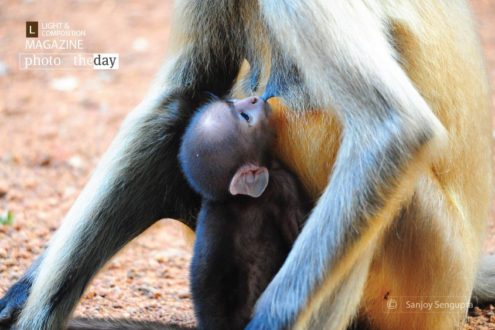
Sanjoy Sengupta has captured this delicate truth in his image titled Mother’s Care. It serves as a gentle reminder of the ancient, unspoken pact between the protector and the small life they carry. Does this quiet moment of connection resonate with your own memories of being held?