The Architecture of Standing Still
In the eighteenth century, landscape designers spoke of the ‘ha-ha’—a sunken fence designed to keep livestock out of the garden without interrupting the view. It was a clever, invisible boundary, a way of asserting order while pretending the wild was still untamed. We have always been obsessed with this tension: the desire to frame the horizon while remaining part of it. There is a particular dignity in a thing that simply stands, indifferent to the shifting fashions of the garden or the encroaching frost. To be a vertical line in a world that demands we constantly move, shift, and negotiate our position is a quiet form of rebellion. We spend our lives looking for a place to anchor ourselves, a spot where the earth feels firm enough to hold our weight through the changing seasons. But perhaps the anchor is not in the ground at all, but in the act of reaching upward, stretching toward a light that does not ask for anything in return. What does it mean to be rooted in a place that is always passing by?
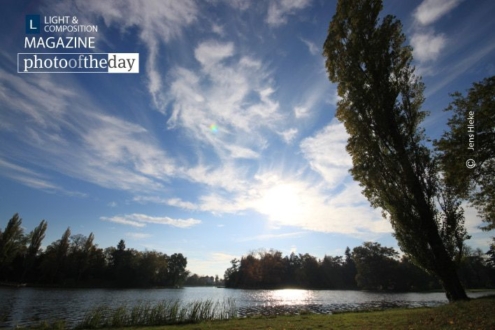
Jens Hieke has captured this stillness in his work titled The Poplar in Wörlitzer Park. It serves as a reminder that even in the most curated spaces, nature finds a way to command our attention. Does this tree feel like a guardian of the park to you?