The Architecture of Silence
We often speak of stone as if it were a dead thing, a heavy anchor tethering us to the earth. Yet, if you sit with an old wall long enough, you begin to suspect that stone is merely a slow-moving liquid, a substance that remembers the heat of the kiln or the pressure of the mountain. In the quiet hours, when the rest of the world has retreated into the soft hum of sleep, these structures seem to breathe. They hold the day’s warmth in their marrow, releasing it only when the air turns thin and blue. There is a particular kind of gravity to a place that has stood through centuries of human prayer and human folly. It suggests that while we are fleeting, our intentions—the desire to build something that reaches toward the stars—are etched into the very fabric of the night. If the walls could speak, would they tell us of the people who walked past them, or would they simply hum the melody of the moon? What remains when the lights finally dim?
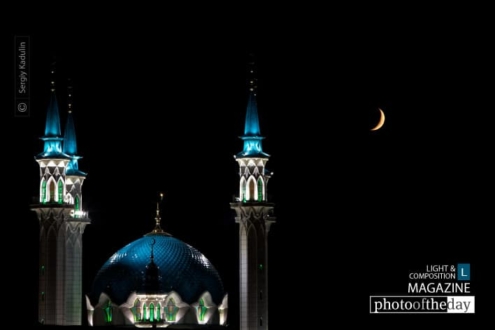
Sergiy Kadulin has captured this stillness in his work titled Kazan Kremlin at Night. It is a quiet meditation on how we leave our mark upon the dark. Does this glow feel like a memory to you?