The Architecture of Memory
We often mistake the city for a collection of static objects—walls, glass, and mortar—but these are merely the shells left behind by human ambition. Every structure is a silent witness to a social contract that has long since expired. When we look at a ruin, we are not just seeing decay; we are seeing the withdrawal of capital, the migration of a workforce, or the quiet erasure of a neighborhood’s original intent. Who was meant to stand behind that threshold? Who was granted the privilege of looking out, and who was relegated to the periphery? The city is a palimpsest, where the layers of our collective history are constantly being written over by the needs of the present. We build to assert our presence, yet the environment eventually reclaims its own, leaving behind a geography of absence that asks us to consider who truly owns the space we inhabit. If the walls could speak, would they tell us of the people who were pushed out, or the ones who were never allowed in?
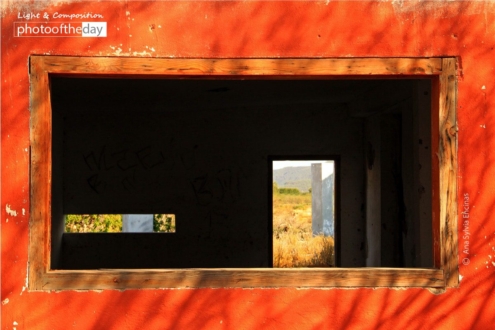
Ana Sylvia Encinas has captured this tension in her work titled The Window. It serves as a stark reminder of how the built environment reflects the shifting tides of our communities. As you look at this remnant of a home, who do you imagine once stood there, and what does their absence say about the city today?