The Unclaimed Commons
We often mistake the city for a collection of buildings, roads, and infrastructure, forgetting that the urban fabric is also a biological map. In the dense, frantic sprawl of a metropolis, we carve out pockets of green, designating them as sanctuaries for nature. Yet, these spaces are rarely neutral. They are contested territories where the human demand for order clashes with the wild, persistent rhythms of the non-human world. When we observe a creature claiming a moment of respite at a stream, we are witnessing a silent negotiation of territory. Who truly owns the water? Who is merely passing through, and who has been displaced to make room for our manicured gardens? The city is not just a document of human ambition; it is a layered record of every inhabitant, feathered or otherwise, trying to survive within the boundaries we have drawn. If we look closely at the edges of our concrete existence, we might find that the most vital parts of the city are the ones we did not build at all.
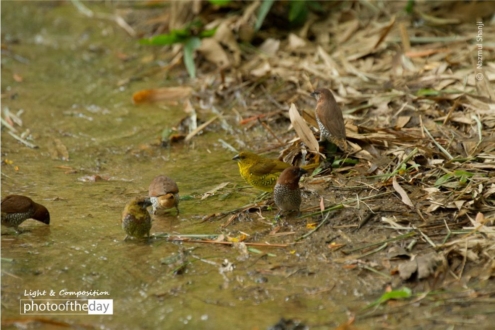
Nazmul Shanji has captured this delicate intersection in the image titled Drinking Time. It serves as a quiet reminder that even in our most structured environments, the wild continues to seek its place. How much of our urban planning truly accounts for those who have no voice in the design process?