The Architecture of Rest
We often mistake the city for a machine of efficiency, a grid designed solely for the movement of capital and the transit of labor. Yet, the most vital urban spaces are those that offer a reprieve from this relentless utility. These are the pockets of land where the city’s pulse slows, where the rigid lines of concrete and steel yield to the organic rhythms of the natural world. When we designate space for leisure, for the simple act of witnessing a season change, we are making a profound statement about the value of human existence beyond productivity. It is a quiet rebellion against the idea that every square inch of our environment must be put to work. Who is granted the time to inhabit these spaces, and who is pushed to the margins to keep the gears of the metropolis turning? When we look at the landscape, we must ask if the city is a place for us to live, or merely a place for us to function.
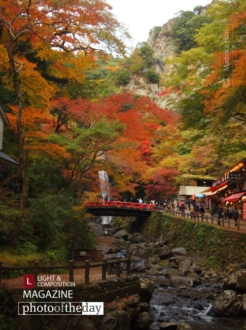
Madoka Hori has captured this tension beautifully in her image titled Color of Momiji. It invites us to consider how we carve out sanctuary within the dense fabric of our urban lives. Does this space feel like a shared refuge to you?