The Currency of Culture
We often mistake the marketplace for a neutral zone, a simple stage where goods are exchanged for coin. But every market is a social document, a map of power and necessity. When traditional crafts are laid out for the passing stranger, the geography of the space shifts. It is no longer just a home or a site of ancestral practice; it becomes a threshold where the local meets the global. We must ask who is performing for whom, and what parts of a culture are being curated for the outsider’s gaze. Is this an invitation to understand, or a strategic adaptation to a world that demands we commodify our heritage to survive? The objects themselves—beads, textiles, tools—carry the weight of a history that predates the arrival of the visitor, yet they are now positioned to bridge a gap between two vastly different realities. Who owns the narrative when the living room becomes a storefront?
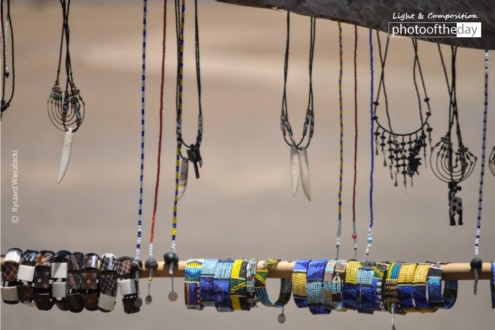
Ryszard Wierzbicki has taken this beautiful image titled Masai’s Handicraft. It captures the tension between tradition and the modern exchange of goods in a way that forces us to consider the human cost of tourism. How do you see the relationship between the maker and the observer in this space?