The Geography of Lost Intentions
There is a specific weight to the map you no longer carry. I am thinking of the paper city guide I once held in a coat pocket, its creases worn white and soft until the paper finally tore along the lines of the Latin Quarter. It was a map of a version of myself who believed that if I followed the printed ink, I would eventually arrive at a destination that mattered. Now, that map is gone, replaced by the digital hum of a device that knows where I am but cannot tell me why I am there. We spend our lives looking for signs, trusting that an arrow pointing left or right holds the secret to our own unfolding. But the most profound moments of our lives rarely happen at the destination we intended to reach. They happen in the detour, in the hesitation, in the quiet realization that the signpost is just a piece of metal, and the city is a labyrinth that doesn’t care if you are lost. What happens to the person you were when you finally stop looking for the way home?
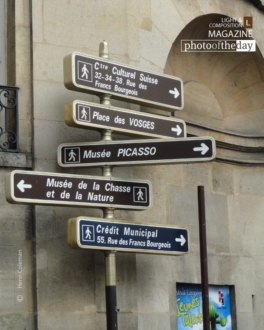
Henri Coleman has captured this quiet uncertainty in his image titled Directions in Paris. It reminds me that we are all just travelers standing before a choice, waiting for a sign that was never meant to be read. Does the path you choose define you, or is it the act of standing at the crossroads that matters most?