The Architecture of Silence
We often mistake memory for a heavy thing, a stone we carry in our pockets. But perhaps it is more like the air that gathers around a monument after the crowds have departed—a cooling of the day’s fever, a settling of dust into the earth. When the sun retreats, the world does not disappear; it simply changes its skin, trading the frantic gold of noon for a velvet, indigo quiet. In this stillness, the things we have built—our promises, our griefs, our grandest gestures—stop being objects and start being ghosts. They lose their sharp edges and become part of the horizon, breathing in the dark. It is in this absence of light that we finally see the true shape of what remains. If you were to stand before the echo of a great devotion, stripped of all its color and noise, would you find it still standing, or would you find it waiting for you to fill the space with your own breath?
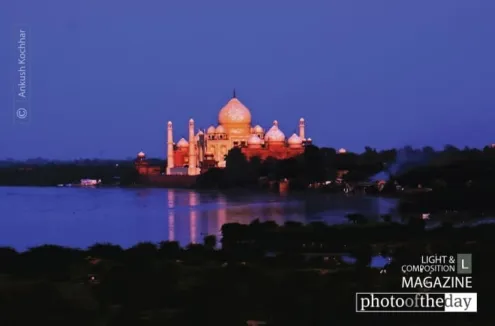
Ankush Kochhar has captured this profound stillness in his image titled Taj Mahal Night. It invites us to consider what happens to our own monuments of love when the rest of the world goes to sleep. Does the silence feel like a weight, or like a sanctuary to you?