The Architecture of Memory
In the nineteenth century, the French poet Baudelaire walked the streets of Paris with a specific kind of hunger. He was a flâneur, a man who wandered without a destination, letting the city reveal itself in fragments of light and shadow. He understood that a place is never just a collection of stone and iron; it is a vessel for the ghosts we carry. We build our lives around these landmarks, pinning our most fragile memories to the silhouettes of towers or the curve of a bridge, as if the physical world could anchor our fleeting internal states. We return to these spots years later, hoping to find the version of ourselves we left behind, only to realize that the city has moved on, even if the iron remains. It is a strange, quiet alchemy—how we project our own longing onto the landscape until the geography itself begins to ache. Is it the place that holds the memory, or are we simply looking for a mirror that refuses to blink?
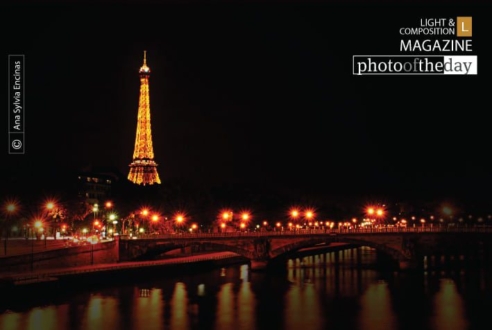
Ana Sylvia Encinas has captured this feeling in her work titled We´ll Always Have Paris. She invites us to stand on that bridge and look toward the horizon, where the lights blur the line between the present and the past. Does this view look like a memory to you?