The Geometry of Arrival
There is a peculiar vertigo that comes with looking down from a great height. On the ground, we are defined by our proximity to things—the texture of a brick wall, the sound of a neighbor’s gate, the specific shade of a garden gate. We live in the details, convinced that the world is a series of singular, isolated events. But when we rise, the perspective shifts, and the chaos of the street begins to resolve into something more rhythmic. Patterns emerge from the sprawl. We see how the veins of a city connect, how the structures we build to house our prayers and our commerce sit nestled against one another like pieces of a puzzle we are only just beginning to solve. It is a humbling realization, to see our grandest efforts reduced to a map, a quiet arrangement of roofs and courtyards. If we could always see the whole, would we still fret so much over the parts? Or is the friction of the ground necessary to make the view from above feel like a sanctuary?
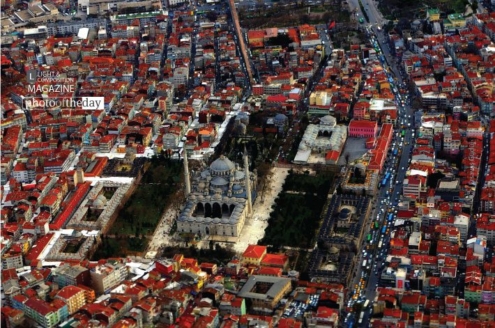
Ersavaş Güdül has captured this sense of suspended order in the image titled Fatih Camii. It is a reminder that even the most grounded monuments can be transformed when we change our vantage point. Does seeing the world from a distance make you feel smaller, or more connected?