The Architecture of Echoes
In the physics of sound, a corridor is never merely a passage. It is a resonator. It holds the vibration of footsteps long after the walker has reached the door, and it keeps the secrets of whispered conversations tucked into the grain of its wood or the coldness of its stone. We often think of history as something written in heavy books, but perhaps it is more accurately found in these transitional spaces—the hallways, the porches, the shaded walkways where people pause to catch their breath. It is in the gaps between the grand monuments that life actually happens. We move through these structures, our bodies temporary and shifting, while the walls remain, indifferent and sturdy, absorbing the rhythm of our daily habits. There is a strange comfort in knowing that a space can outlive our own fleeting movements, holding onto the ghost of a dance or the lingering warmth of a summer afternoon. If the walls could speak, would they tell us of the empires that built them, or of the quiet, ordinary people who simply sought a bit of shade?
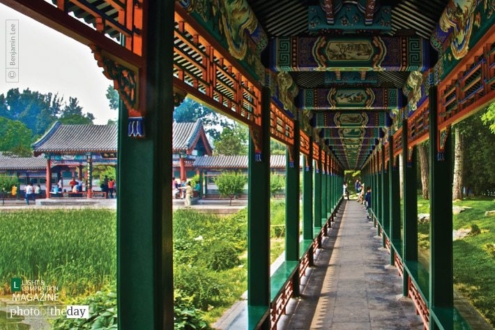
Benjamin Lee has captured this sense of enduring stillness in his work titled Summer Corridor. It is a beautiful meditation on how we inhabit the spaces left behind by history. Does the quiet of this place invite you to step inside and join the dance?