Tiny Bird by Nu Yai Sing Marma
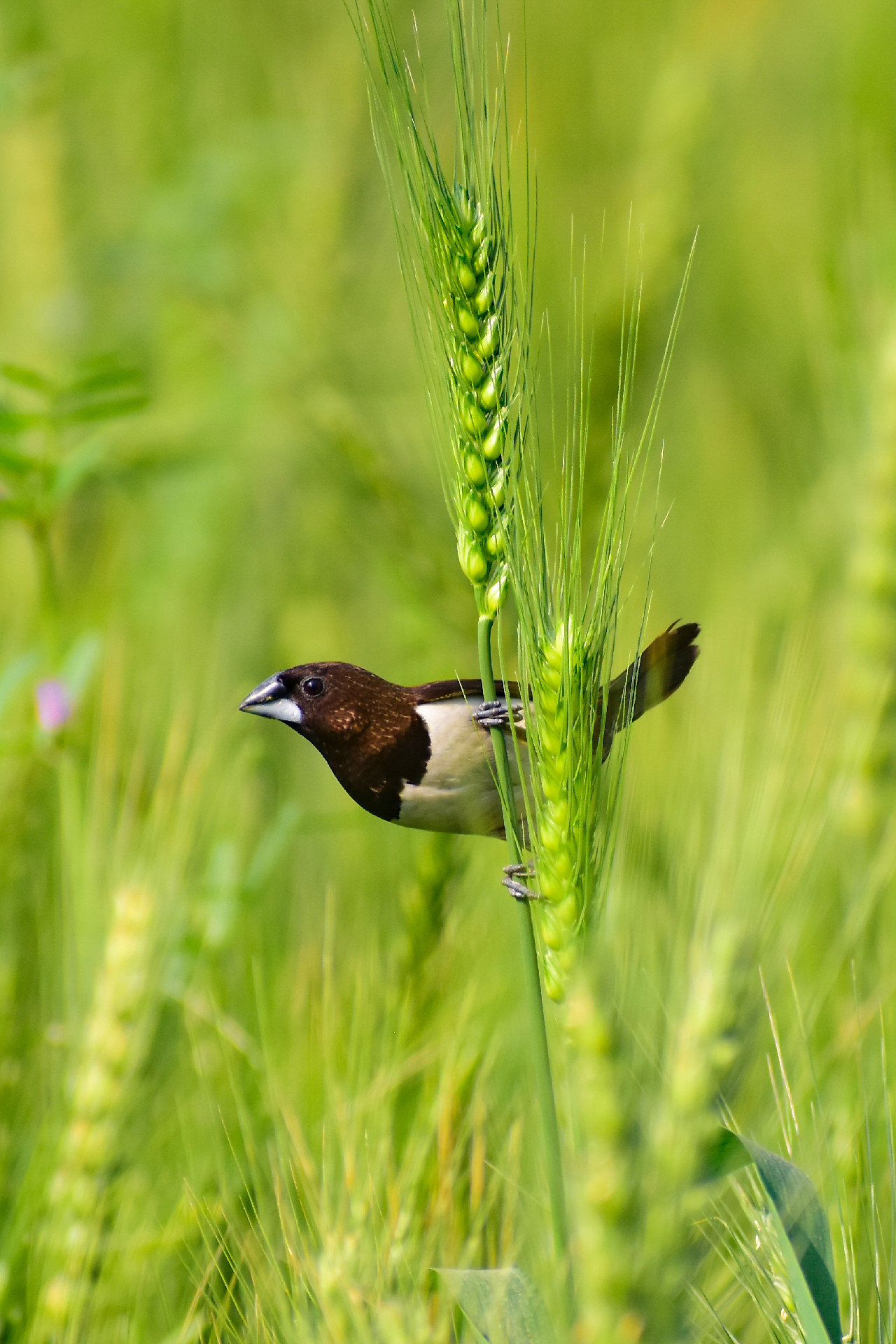
One cool February morning, we strolled across Rajshahi University’s campus, where experimental wheat gently swayed. Tiny munias fluttered through the tall stalks, searching for seeds. A dazzling White-rumped Munia suddenly appeared in my view—its delicate beauty froze the moment, and I captured it forever in a single, perfect shot. As it perched gracefully on a nearby stalk, the early sunlight illuminated its plumage, creating a fleeting yet unforgettable scene.
Nu Yai Sing Marma
Nu Yai Sing Marma is known as a tribal girl and a devoted photographer. A passion for photography was discovered during her university years, when it was felt that her hobby should be pursued seriously. Lifestyle, nature, and documentary photography are chosen as her main genres. Through her work, the culture and lifestyle of Bangladesh are portrayed, with special focus given to tribal communities. Many untold stories are captured and expressed through her lens. Each photograph is created to narrate a story, allowing traditions to be preserved and the diverse essence of her homeland to be shared with the world.
Resonance Score Breakdown
Transparency Note: The resonance score (5.6/20) is calculated based on social engagement metrics collected before the award announcement.
Expert Photography Reviews · 8
The Weight of a Feather
The blue ceramic mug that sat on my father’s desk for twenty years is gone. It was chipped at the rim, a jagged little canyon where he had once dropped it against the edge of the sink.
Read the reflection →The Weight of a Feather
There is a profound grace in things that possess no need to be noticed. We spend our days building monuments of ambition, carving our names into the stone of our own importance, yet the world continues to turn on the strength of the smallest, quietest movements.
Read the reflection →Reviews & Comments
Share your thoughts about this award-winning photograph. Your reviews contribute to the community engagement score.
There’s a sharp, clean clarity to this munia, but it’s a bird, not a person. I’ve spent my life looking for the flicker of recognition in a subject’s eyes, that moment when a stranger lets you in. Here, the lens is just a tool for distance. It’s technically precise, sure, but it doesn’t breathe. I miss the weight of a human soul. I’m left cold by the feathers, beautiful as they are.
The wheat stalks create a golden, rhythmic architecture, echoing the delicate geometry of the munia’s perch. It’s a masterclass in context; the environment isn’t just a backdrop, it’s the bird’s entire world. I’m genuinely moved by how the soft, early light catches the grain, grounding the creature in its fragile habitat. Without those swaying stalks, we’d lose the story of the morning. It’s a beautiful, quiet dialogue between a tiny life and the earth.
It’s refreshing to see such crisp, unfiltered light. Down where I usually work, the water column steals every warm photon, leaving us to fight backscatter and refractive distortion just to see a subject clearly. Here, the sun hits the munia’s plumage without the heavy blue-green filter of the ocean. I’m genuinely envious of how easily this bird holds its colour. It’s a sharp, clean capture that doesn’t have to struggle against the physics of depth.
The munia clings to the wheat, a fragile anchor against the void. Most photographers chase the sun, but here, the darkness surrounding the stalk is where the bird truly exists. It’s a quiet, desperate defiance of the light. I’ve spent hours staring at this frame, feeling the cold February air bite my own skin. It doesn’t just capture a bird; it captures the weight of a life existing only because the shadow allows it to be seen.
In Rajshahi, the wheat bows low, and we find a tiny munia caught in the morning light. It’s a portrait of stillness. I’ve spent my life listening to human stories, but here, the bird’s gaze holds a quiet dignity that feels deeply familiar. It doesn’t need words to tell us of its fleeting existence. I feel a sudden, sharp ache for the simplicity of this moment. It’s a photograph that asks to be returned to.
The morning air in Rajshahi must have been crisp, holding that quiet stillness before the day truly wakes. I feel a sudden, sharp ache of nostalgia looking at this munia; it’s a fragile anchor in the swaying wheat. He didn’t force the frame. He waited until the light caught the bird’s plumage just right. It’s a humble, holy intersection of patience and breath. I’ve spent hours in such fields, and I know that peace.
The wheat stalks lean away. They leave the bird alone in the frame. It’s a quiet geometry. I’ve spent minutes watching the way the light catches those feathers. It doesn’t crowd the space. It breathes. I feel a sudden, sharp stillness in my own chest looking at it. Nothing here is accidental. The empty corner is not empty. It is the weight of the morning air. A rare, perfect pause.
A single, perfect shot. That’s the curator’s claim, and it’s usually the hallmark of a lucky amateur. One suspects the bird simply wandered into the frame while the photographer was out for a stroll. I’ve spent weeks in damp hides for a fraction of this clarity. It’s a sharp capture, certainly, but I find myself wanting the grit of a longer vigil. Did you return, or was this just a pleasant morning walk?