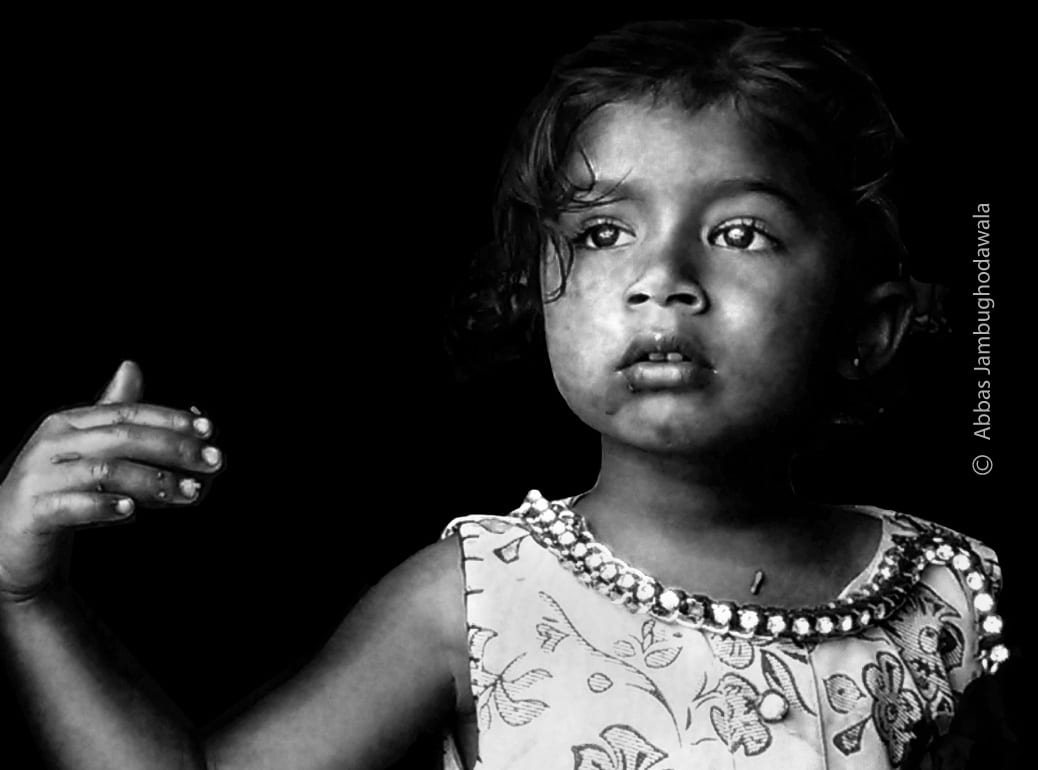
Enjoying Her Chips by Abbas Jambughodawala
In the quiet corners of a village shop in Gujarat, a young girl pauses to enjoy a simple snack, unaware of the lens capturing her innocence. The photographer, struck by the genuine interaction, waited for a moment of natural shyness before documenting the scene. This portrait is award-worthy for its raw, unposed authenticity and the delicate connection established between the subject and the observer. By focusing on the girl’s expressive eyes and the candid atmosphere of the shop, the image transcends a simple snapshot, offering a poignant glimpse into the everyday life and human spirit found within a small Indian community.
Abbas Jambughodawala
Based in the town of Dahod, Gujarat, Abbas Jambughodawala is an architecture student who utilizes photography as a profound tool for exploring the intersection of human life, culture, and the built environment. His work is driven by a desire to understand how architecture shapes the daily experiences of the people he encounters throughout his travels in India. Through his lens, he captures the authentic essence of his subjects, documenting the vibrant social fabric of his home region with a keen, observant eye.
Resonance Score Breakdown
Transparency Note: The resonance score (11.1/20) is calculated based on social engagement metrics collected before the award announcement.
Expert Photography Reviews · 6
The Weight of Small Joys
Epictetus once remarked that we ought to be like the sun, which does not wait for prayers or incantations to shine, but simply gives its light to all. There is a profound, quiet dignity in the act of existing without the need for an audience.
Read the reflection →The Salt of Small Things
The taste of salt is a sharp, sudden geography on the tongue. It brings me back to the sticky heat of mid-afternoon, the kind that makes your skin feel like it is wearing a second, heavier layer of itself.
Read the reflection →Reviews & Comments
Share your thoughts about this award-winning photograph. Your reviews contribute to the community engagement score.
Most entries I see today are polished to death, losing their soul in the process. What separates this from the usual travel-portrait clutter is the girl’s guarded, salt-dusted fingers. It’s a small, messy detail that grounds the frame in reality. I’ve looked at thousands of portraits, yet this one makes me crave the simple, quiet joy of a snack in a dusty shop. It’s a fleeting moment that’ll still matter thirty years from now.
The Huawei’s sensor struggles here, but that’s exactly why I’m drawn to it. It’s not about the resolution; it’s about the smear of light across the girl’s face. This approach is closer to Hiroshi Sugimoto’s long-exposure theatres than to conventional portraiture. Why resolve the background when the blur captures the fleeting nature of her snack? I find the digital noise strangely beautiful, a reminder that perfection is just a boring, technical constraint we’ve outgrown.
Light here doesn’t merely illuminate; it interrogates. In the dim recesses of this Dahod shop, the shadows aren’t just voids, they’re the heavy silence surrounding the girl’s snack. It’s a fragile, fleeting existence. I’ve stared at her eyes for an hour, feeling the crushing weight of her isolation against the encroaching dark. She doesn’t know she’s being consumed by the frame. It’s haunting, really. A reminder that we’re all just flickering embers waiting for the night.
That girl’s gaze hits you like a freight train. It’s raw. Abbas caught her mid-crunch, eyes locked on the lens with that beautiful, unscripted hesitation. If he’d fired a tenth of a second later, the magic would’ve evaporated into a mundane snack break. I love the grit here; it’s not posed, it’s lived. It’s the kind of honesty Winogrand chased. He didn’t miss. He was there, he saw it, and he nailed it.
The light here doesn’t demand attention; it settles softly, as if it’s been waiting in this shop for years. She’s caught in that fragile, fleeting stillness before the world rushes back in. I’ve spent enough hours in the quiet to recognize the patience it took to remain invisible. It’s a humble, sacred pause. Looking at her eyes, I feel a sudden, sharp ache for the simplicity of a moment that doesn’t know it’s being watched.
At f/5.3, the Huawei’s sensor struggles against the diffraction limit, yet it captures a startling intimacy. The focal plane rests precisely on her irises, where the light’s refraction reveals a depth the human eye usually misses. I’m genuinely moved by how the lens resolves those stray crumbs against her skin; it’s a fragile, optical honesty. It doesn’t matter that the optics aren’t perfect. The way the light clings to her expression is, quite simply, beautiful.