The Weight of Water
In the quiet corners of a house, water behaves differently than it does in the wild. In a porcelain basin, it is a servant, a predictable element that obeys the turn of a handle. We forget that water is, by its nature, a sculptor of stone. It does not ask for permission to reshape the earth; it simply persists, wearing down the stubborn edges of mountains until they are soft enough to hold a reflection. There is a profound, slow-motion violence in the way a river carves a canyon, a testament to the idea that persistence is a form of strength. We often mistake stillness for weakness, yet the most powerful forces are those that move with a steady, unhurried rhythm, indifferent to the passing of human time. If we were to stand long enough in the path of such a force, would we eventually be smoothed into something unrecognizable, or would we simply become part of the current?
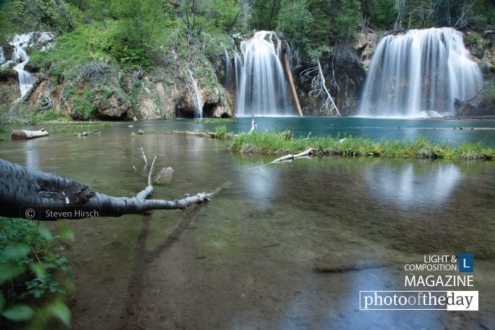
Steve Hirsch has captured this relentless grace in his photograph titled Hanging Lakes. It serves as a reminder that even the most rugged landscapes are merely waiting for the water to finish its work. Does the stone ever grow tired of the touch of the stream?