The Weight of Unread Pages
In the quiet corners of an old house, there is a specific kind of silence that belongs only to paper. It is a heavy, settled sort of stillness, the kind that gathers when words are no longer being spoken aloud but are instead held in suspension, waiting for an eye that may never arrive. We often think of history as a grand, sweeping narrative, something carved into stone or marched across battlefields. Yet, history is more often found in the domestic debris of a life: a grocery list tucked into a drawer, a ledger left open on a desk, the dust settling on a spine that has not been touched in decades. These are the artifacts of our own transience. We leave behind these paper ghosts, these small, fragile anchors of our existence, hoping perhaps that the weight of our thoughts will outlast the walls that once contained them. But time has a way of softening the edges of our intentions, turning our urgent records into mere texture. If we were to leave a room behind, what would the paper say about us when the light finally fades?
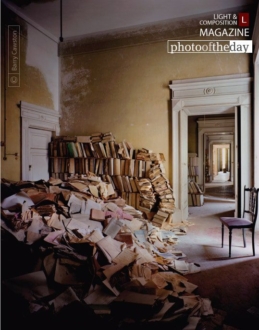
Barry Cawston has captured this exact feeling of suspended time in his work titled Books Napoli. He invites us to stand amidst the remnants of a forgotten archive, where the past is not quite gone, but simply resting. Does the silence of these pages speak to you of loss, or of something else entirely?