The Weight of the Loom
I am generally suspicious of places that trade on their own history. There is a tendency to romanticize the labor of the past, to turn the grit and the repetitive ache of manual work into something picturesque for the sake of a quiet afternoon. I walked toward this scene expecting to find that familiar, hollow nostalgia—the kind that treats human effort as a mere aesthetic choice. I wanted to see it as a stage set, a relic preserved for the benefit of those who have never known the exhaustion of a day spent tethered to a machine. But the longer I looked, the more the artifice fell away. It wasn’t the history that held me, but the sheer, stubborn persistence of the lines. There is a rhythm here that doesn’t care for my skepticism, a silent, grinding continuity that suggests some things are not meant to be looked at, but endured. What happens to a person when their life is measured in the steady, rhythmic crossing of thread?
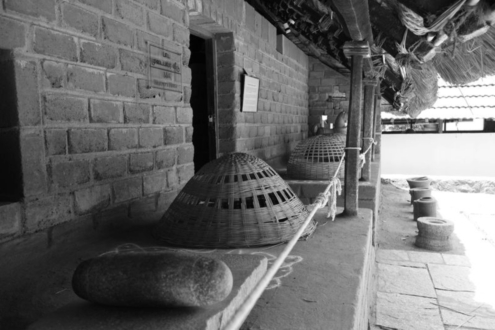
Karthick Saravanan has captured this reality in his photograph titled Mate Weavers House. It is a stark reminder that some traditions are kept alive not by choice, but by the weight of the hands that hold them. Does the work define the space, or does the space eventually consume the worker?