The Weight of Dust
In the high, thin air of the Andes, they say the dust does not merely settle; it migrates. It travels on the backs of the wind, carrying the history of the earth from one valley to the next, a fine, powdered record of everything that has crumbled. We spend our lives trying to stand still, to plant our feet firmly on something solid, yet we are constantly being dusted by the remnants of what came before. There is a strange, quiet dignity in this erosion. To be worn down is not necessarily to be diminished; it is to be refined, to be made part of the larger, shifting geography of the world. We are all, in a sense, moving through our own clouds, leaving traces of our passage behind us, unaware of how our own small movements contribute to the haze that defines the horizon for someone else. If the earth itself is in a state of constant, slow-motion departure, what does it mean to leave a footprint that truly lasts?
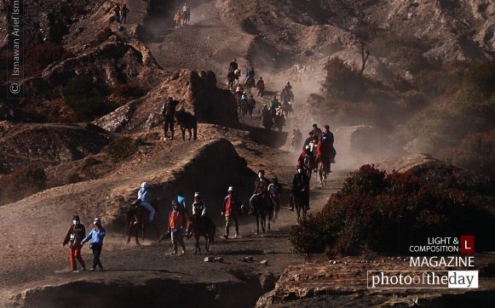
Ismawan Ismail has captured this sense of transient weight in his beautiful image titled Bromo Hillside. The way the earth rises to meet the sky through that veil of grit makes me wonder: are we the ones moving through the landscape, or is the landscape moving through us?