The Weave of What Remains
There is a specific silence that lives in the hands of a maker. It is the silence of a rhythm that has been practiced until it becomes a heartbeat, a way of folding the world into shape. I think of the wooden loom in my grandmother’s attic, the one that stopped clicking the year she forgot how to tie the knots. When the hands stop, the object they were creating doesn’t just cease to exist; it becomes a ghost of a process. We surround ourselves with mass-produced things that arrive finished, hollow, and without a history. They have no memory of the tension required to bring them into being. We lose the connection to the labor, the slow, deliberate friction of material against skin. When a craft dies, it is not just the tool that vanishes, but the particular way a human being once occupied their time, their breath, and their focus. What happens to the patience that used to live in those fingers?
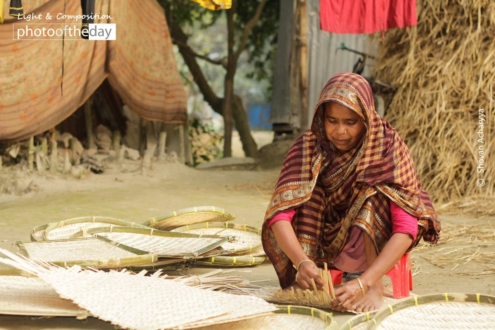
Shovan Acharyya has captured this quiet persistence in his image titled The Kula Artist. He reminds us that even as the world rushes toward the disposable, there is still a profound dignity in the act of holding onto the handmade. Does the object hold the memory of the maker, or does the maker leave a piece of their soul in the weave?