
The Weathering of Stone
Lichens are the slow architects of the wild, colonizing bare rock with a patience that defies our human sense of urgency. They do not fight the stone; they integrate with it, breaking down the mineral surface over decades, turning the impenetrable into soil. This process of weathering is not a destruction, but a transformation—a quiet, persistent dialogue between the organism and the earth. We often view the passage of time as a process of erosion, a wearing away of the self until only the brittle remains are left. Yet, like the lichen, we are shaped by the very elements we endure. Our lines and textures are not merely signs of decay, but a record of our environment, a map of every season we have weathered. If we stop trying to resist the friction of the world, might we find that we are actually becoming part of the landscape we inhabit? What remains when the urgency of youth finally yields to the slow, steady work of being?
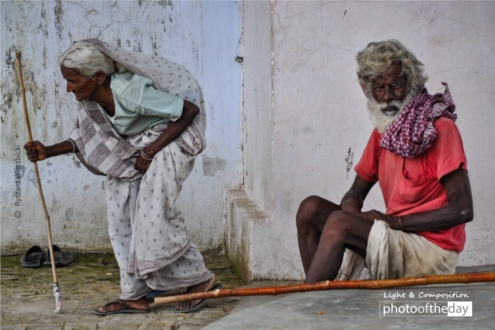
Ryszard Wierzbicki has captured this profound sense of endurance in his image titled Oldness in Two. It serves as a gentle reminder that there is a quiet dignity in the way we carry our history. Does this image change how you perceive the passage of time in your own life?
 (c) Light & Composition University
 (c) Light & Composition University