
The Unspoken Boundary
We often mistake silence for a lack of language, assuming that if a person does not speak, they have nothing to say. Yet, there is a particular kind of gravity found in the quiet observation of a stranger. It is a boundary, invisible but firm, that exists between the person who watches and the person who is watched. In the domestic sphere, we see this in the way a child might stop mid-play, sensing a shift in the room, their posture suddenly becoming a statement of territory. It is not necessarily an act of hostility, but rather a profound assertion of selfhood. To be seen is to be vulnerable, and to hold one’s ground in the face of that gaze is a quiet, monumental act of courage. We spend our lives trying to bridge these gaps, to find common ground through words or gestures, but perhaps the most honest connection is simply acknowledging that the boundary exists. How do we reconcile the desire to understand another with the necessity of letting them remain entirely, fiercely themselves?
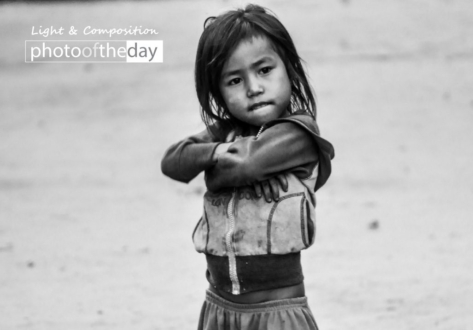
Ryszard Wierzbicki has captured this delicate tension in his work titled Young Pride. It is a reminder that even in the most remote corners of the world, a person’s spirit remains their own private fortress. Does this image make you feel like a guest, or an intruder?
 (c) Light & Composition University
 (c) Light & Composition University