The Unmapped Geography of Joy
There is a curious physics to the way we perceive distance. We are taught that geography is defined by borders, by the lines drawn on maps that dictate where one life ends and another begins. Yet, if you sit long enough in a quiet room, you realize that the most significant distances are not measured in miles, but in the sudden, unbidden recognition of a shared pulse. We spend so much of our lives building walls against the unknown, convinced that the people on the other side of the horizon are fundamentally different, governed by separate stars and distinct sorrows. But then, a moment arrives—a flash of teeth, the crinkle of an eye, a laugh that requires no translation—and the map dissolves. It is a startling, quiet revolution. We find that the architecture of joy is identical everywhere, built from the same fragile, resilient materials. If we are all carrying the same weight of existence, why do we insist on measuring the space between us as if it were a canyon, rather than a bridge? What happens to the map when the border is no longer a wall, but a mirror?
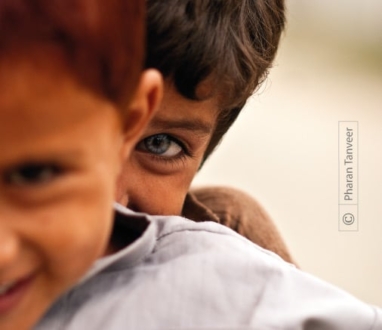
Pharan Tanveer has captured this truth in the image titled Children of Pakistan. It is a gentle reminder that the geography of the human spirit is far more interconnected than we dare to believe. Does this not make the world feel a little smaller, and perhaps a little warmer, to you?