The Uniform of History
Cities are often described as palimpsests, where the new is written over the old, yet the ghost of the previous script remains visible beneath the surface. We tend to think of urban progress as a linear march toward the sleek and the contemporary, but the reality is far more layered. Certain institutions act as anchors, resisting the erosion of time by clinging to the aesthetics of a bygone era. When we see a figure dressed in the rigid, symbolic language of the past standing amidst the fluid, chaotic movement of a modern transit hub, we are witnessing a collision of temporalities. It forces us to consider the weight of authority and the comfort of continuity. Does the uniform protect the city, or does it merely remind us that the structures of power are designed to feel permanent, even as the people beneath them change? We are left to wonder if these symbols are meant to serve the public or simply to anchor the city to a version of itself that no longer exists.
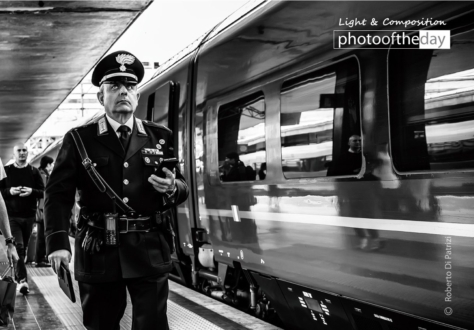
Roberto Di Patrizi has captured this tension in his work titled Unchanged Over Time. He invites us to look at how tradition persists in the middle of our daily commute. Does this sense of history make you feel more secure, or does it feel like a barrier between the citizen and the state?