The Right to the City
Public space is rarely neutral. It is a contested territory, a stage where the invisible lines of class, history, and belonging are constantly negotiated. When we see a street erupt in color and collective movement, we are witnessing more than a celebration; we are seeing a reclamation of the urban fabric. For a few hours, the rigid geometry of the city—the walls, the narrow alleys, the boundaries of private property—is softened by the presence of the human collective. It is a reminder that the city is not merely a collection of infrastructure and zoning laws, but a living document written by those who inhabit it. When a community claims the street, they are asserting their right to exist in the center of the frame, rather than being pushed to the periphery. It forces us to consider who is usually permitted to occupy these spaces, and whose presence is deemed an interruption to the order of the day. If the city is a mirror of our social values, who is reflected in its most vibrant moments?
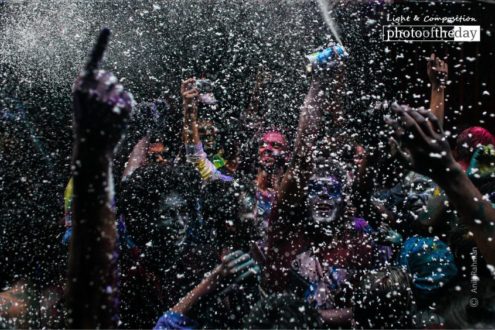
Anik Rahman has captured this energy in his image titled Holi Celebration in Bangladesh. It serves as a powerful reminder of how cultural traditions can temporarily reshape the social geography of our shared environments. Does this space belong to the city planners, or does it belong to the people who fill it with such life?