The Mirror of the Dark
Seneca once observed that we are often more afraid than hurt, and that we suffer more in imagination than in reality. He understood that the darkness of the mind is a far more formidable terrain than the darkness of the world. When we find ourselves surrounded by the night, we are prone to projecting our own anxieties onto the void, turning the stillness into a canvas for our restlessness. Yet, the ancients knew that the night is not an absence of light, but a different way of seeing. It is in the quiet, when the clamor of the day has receded, that the true shape of our surroundings emerges. To sit with the dark is to practice a form of patience that the daylight rarely demands. It requires us to stop reaching for the next thing and instead accept the clarity that only arrives when we cease our frantic movement. What remains when the noise of the world finally falls silent?
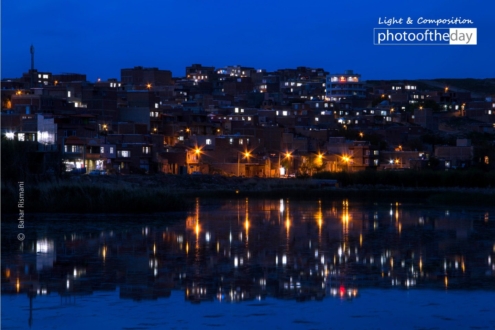
Bahar Rismani has captured this stillness in the image titled Lights at Night. The way the city finds its double in the water reminds us that we are always accompanied by our own reflections, even in the deepest hours. Does this quiet scene offer you a moment of rest?