
The Labor of History
We often treat historical sites as static museums, frozen in amber for the benefit of the visitor. We consume these spaces as aesthetic experiences, curated to tell a story of the past that feels safe and distant. Yet, the city is never truly a museum; it is a living, breathing document of labor. Behind every monument and every carefully preserved facade, there is a hidden geography of maintenance and service. Who is tasked with keeping the past polished for our modern gaze? Who occupies the margins of these heritage sites, providing the sustenance and care that allow the illusion of history to persist? When we visit these places, we are often blind to the people who make the experience possible, seeing them as part of the scenery rather than as the essential architects of our daily encounter with the site. If the city is a stage, we must ask ourselves who is performing for whom, and what happens when the audience leaves and the labor remains. Is the city a place for us to remember, or a place for others to survive?
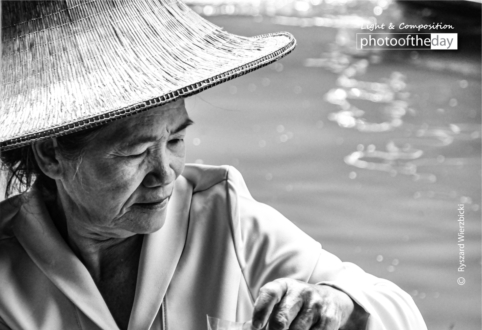
Ryszard Wierzbicki has taken this beautiful image titled The Siam Woman. It captures a moment of quiet presence within a space designed to reflect the past, forcing us to confront the reality of the person behind the scenery. Does this portrait change how you view the people who inhabit the spaces we visit?