The Geometry of Migration
When a flock of geese takes flight, they do not move as individuals, but as a single, fluid organism governed by the invisible currents of the air. Each bird adjusts its position by mere inches, sensing the wake of the one ahead to conserve energy, a phenomenon known as drafting. It is a profound lesson in cooperation; by aligning themselves with the collective, they achieve a velocity that no single bird could sustain alone. We often view our own lives as solitary pursuits, struggling against the headwinds of our ambitions as if we must conquer the distance by our own strength. Yet, we are rarely as isolated as we believe. We are constantly caught in the slipstream of others, our paths shaped by the invisible forces of those who have passed before us. We are part of a larger, shifting pattern, moving toward a destination that is defined not by the individual, but by the collective rhythm of the journey. What happens when we stop fighting the wind and simply find our place in the formation?
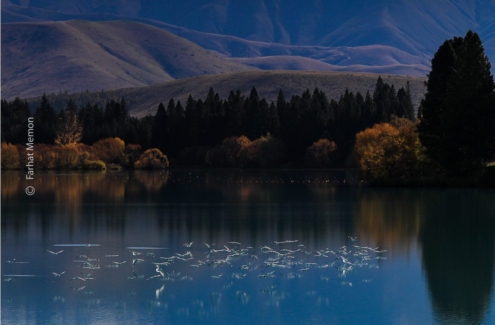
Farhat Memon has captured this sense of collective movement in the image titled It’s a Race to the Finish Line. The way the birds interact with the stillness of the water reminds me that even in the most quiet landscapes, there is a constant, driving pulse. Does this image make you feel like you are part of the migration, or are you watching from the shore?