The Geometry of Devotion
We often mistake the city for its hard edges—the concrete, the steel, the zoning maps that dictate where we sleep and where we toil. Yet, the true urban fabric is woven from the invisible threads of ritual. In the dense, layered history of a neighborhood, space is claimed not just by architecture, but by the repetitive, quiet acts of those who inhabit it. When we prepare a surface for a ceremony, we are temporarily reclaiming a piece of the city from the cold efficiency of the grid. We are asserting that this ground belongs to something older, something shared, something that defies the logic of the developer. These small, meticulous arrangements are the heartbeat of a community, a way of marking territory that has nothing to do with property lines and everything to do with belonging. It is a reminder that even in the most crowded metropolis, we are constantly carving out sanctuaries for the sacred. Who is allowed to claim this space, and what happens when the ritual ends and the city rushes back in?
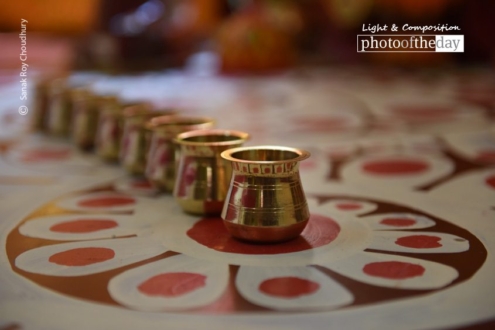
Sanak Roy Choudhury has captured this delicate intersection of faith and geography in his work titled The Divine Eight. It serves as a quiet testament to how tradition persists within the modern urban landscape. Does this arrangement feel like a permanent fixture of the city to you, or a fleeting moment of grace?