
The Geography of Time
In the deep mid-winter, the light in the north loses its urgency. It becomes thin, almost translucent, settling into the hollows of the landscape like a fine, grey dust. It is a light that does not demand anything of you; it simply reveals. When the sun stays low, it catches the texture of the world—the rough bark of a birch, the weathered stone of a wall, the lines etched into a face. We often fear this clarity, preferring the soft, forgiving blur of high summer, yet there is a profound honesty in the way winter light maps the passage of years. It highlights the topography of a life, turning every mark of experience into a feature of the terrain. We are all landscapes, shaped by the seasons we have endured and the weather we have weathered. When the light finally recedes, leaving only the cool, violet shadow of dusk, what remains of us is not what we have done, but the quiet history written upon our skin. Does the light ever truly leave, or does it simply sink deeper into the grain of who we are?
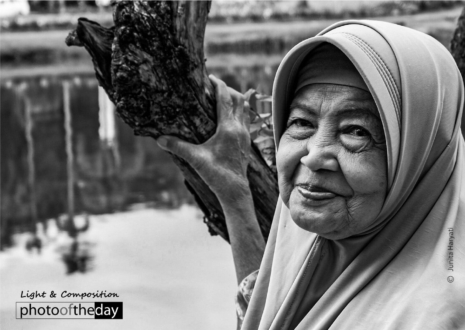
Junita Haryati has captured this quiet history in her beautiful portrait titled Timeless Beauty. The light falling across the subject’s face feels like the first, gentle sun of a new year, revealing a lifetime of grace. How do you read the stories written in the lines of a face?
 (c)
(c) (c) Light & Composition University