The Geography of the Table
We often mistake the city for its skyline, for the steel and glass that announce power and capital. But the true city is found in the margins, in the small, makeshift spaces where people carve out a sense of home amidst the relentless pressure of urban density. A meal shared on a sidewalk or in a narrow alleyway is not merely a biological necessity; it is a political act. It is a reclamation of space by those whom the formal city often ignores or displaces. When we gather to eat, we create a temporary territory of belonging, a brief pause in the frantic rhythm of survival. These pockets of intimacy reveal the invisible infrastructure of community—the way people rely on one another to soften the hard edges of their environment. Who is permitted to occupy the public realm, and who is relegated to the shadows? The city is a document of our priorities, written in the places where we are allowed to sit, to rest, and to be seen.
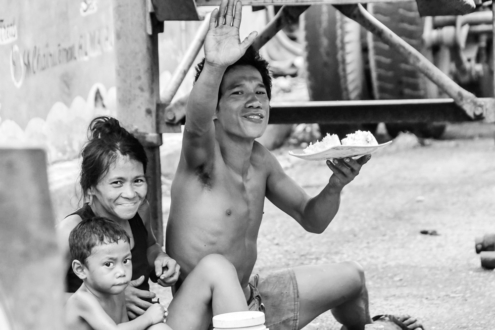
Ryszard Wierzbicki has taken this beautiful image titled Rice Meal. It captures a moment of shared humanity that reminds us how dignity is often found in the most modest of settings. Does this scene reflect a city that welcomes everyone, or one that demands we find our own way to survive?