
The Geography of Silence
We often mistake the absence of people for the absence of history. When we look at the wild, rugged edges of our world, we tend to see only the physical terrain—the rock, the ice, the sky. Yet, every landscape is a document of exclusion and belonging. We draw lines on maps that designate some spaces as ‘wilderness’ and others as ‘civilization,’ as if the two were not deeply intertwined. Who is permitted to inhabit the quiet? Who is pushed to the margins of the grid, and who is granted the privilege of solitude? The city is a loud, crowded negotiation of rights and resources, but the mountain night reminds us that our social structures are fragile constructs. We build our walls and our streets to contain human life, but we are always dwarfed by the vast, unmanaged spaces that exist beyond our control. If we stripped away the pavement and the streetlights, would we know how to exist in a place that asks nothing of us? Who is the city really for, if we are so afraid of the dark?
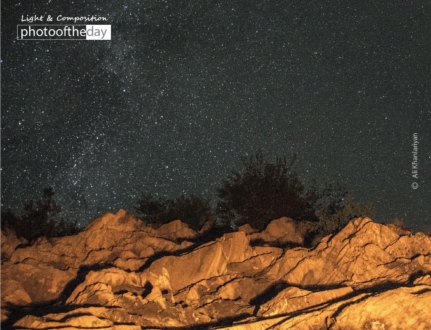
Ali Khanlariyan has captured this profound stillness in the image titled Cold Mountain Night Sky. It serves as a stark reminder of the spaces that exist outside our urban planning. Does this vastness make you feel more connected to the world, or more isolated from it?