
The Geography of Resilience
We often mistake the periphery for the margins, assuming that distance from the urban core equates to a lack of complexity. Yet, in the high-altitude reaches of the world, geography dictates a social contract far more rigorous than any city ordinance. Here, survival is a collective act, written into the lines of a face and the callouses of a hand. We look at these remote outposts and see isolation, but perhaps we are the ones who are truly disconnected, tethered to systems that prioritize efficiency over endurance. The built environment in these places is not made of steel or glass, but of stone and tradition, shaped by the necessity of holding one’s ground against the elements. It forces us to confront the reality that some lives are defined by their ability to remain, while others are defined by their constant movement. Who is the true architect of a landscape that demands everything from those who inhabit it, and what does it mean to be a guest in a home carved from such unforgiving stone?
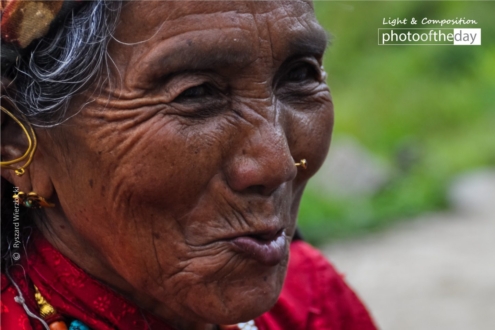
Ryszard Wierzbicki has taken this beautiful image titled A Himalayan Woman. It invites us to consider the quiet strength of those who anchor the world’s most challenging terrains. Does this portrait change how you perceive the people who live at the edge of the map?