The Geography of Play
We often mistake the street for a mere conduit—a way to get from one point of utility to another. But for those who have not yet been disciplined by the rigid schedules of adult labor, the street is a territory of infinite possibility. It is a commons, a playground, and a stage where the social fabric is woven through movement. When we design our cities, we tend to prioritize the flow of machines, effectively pushing the human element to the margins. We create zones of transit rather than zones of dwelling. Yet, in the quiet corners of the world, children reclaim these spaces, asserting their right to exist in the public realm without the need for a destination. They turn the asphalt into a map of their own making, proving that a city is not defined by its infrastructure, but by the freedom of those who inhabit it. If we strip away the commerce and the transit, what remains of our streets when the children are no longer there to claim them?
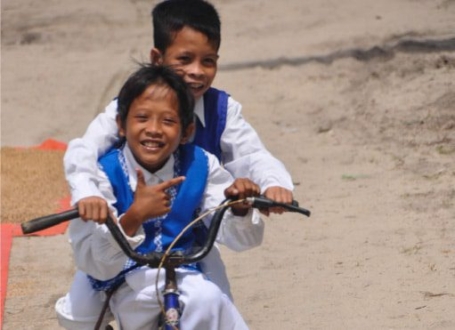
Ryszard Wierzbicki has captured this spirit in his beautiful image titled Alimanguan Cycling Boys. It serves as a reminder that the most vital parts of a village are the paths carved out by its youngest residents. Does your own neighborhood still allow for this kind of unscripted movement?