The Geography of Grace
We often mistake the city for a collection of infrastructure—roads, pipes, and zoning laws. But the true urban fabric is woven from the invisible threads of social expectation and the rituals we perform to navigate one another. In dense, historic centers, space is rarely just a physical container; it is a stage for the performance of status, survival, and belonging. We look for the markers of class in the clothes people wear or the tools they carry, yet we frequently overlook the quiet, performative gestures that sustain a community. These small, daily interactions are the glue of the public realm, acting as a counter-narrative to the cold efficiency of urban planning. When a stranger offers a gesture of recognition, they are asserting their presence in a space that might otherwise render them invisible. Who is granted the right to be seen, and whose humanity is relegated to the background of our rapid, modern transit? What does it mean to be a citizen in a place that demands so much, yet offers so little in return?
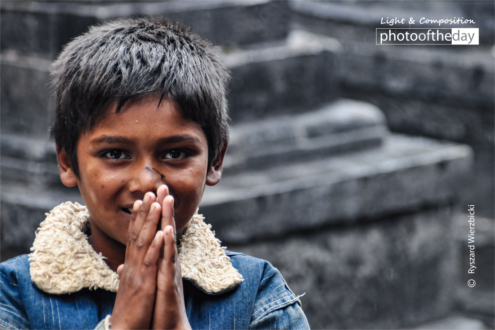
Ryszard Wierzbicki has taken this beautiful image titled A Blessing Boy of Kathmandu. It captures a moment of connection that reminds us how the spirit of a city is defined by its people rather than its walls. How do you see the human geography of your own neighborhood reflected in the faces you pass each day?