The Geography of Exclusion
We often romanticize the open road as a symbol of freedom, a ribbon of asphalt cutting through the wild. But every road is a statement of intent. It is an infrastructure of access, built to connect specific points while bypassing others. When we look at a path carved through a landscape, we must ask who it was built for and who it leaves behind. Does this route serve the local inhabitant, or is it merely a conduit for the transient visitor, a way to consume the scenery without ever touching the soil? The wilderness is rarely as empty as it appears; it is often a landscape of displacement, where the human history of the land is smoothed over to satisfy a desire for solitude. We build these veins of concrete to escape the density of our own making, yet we carry our expectations of ownership with us. If the city is a document of our social contracts, what does this lonely stretch of road say about our relationship to the earth?
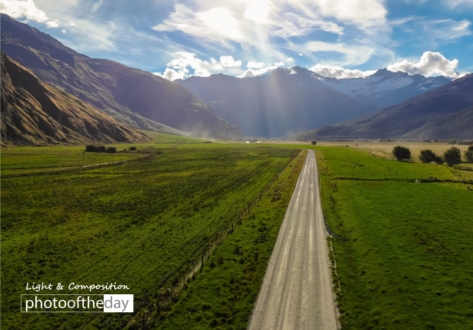
Manon Mathieu has captured this tension in the image titled Long Road to Nowhere. It invites us to consider the cost of our desire for the untouched. Does this road lead to a destination, or are we just passing through someone else’s silence?