The Geography of Belonging
We often mistake the landscape for a backdrop, a static stage upon which human history is merely performed. Yet, the land itself is a document. Every fence line, every cleared path, and every manicured garden tells a story of enclosure and access. Who decided that this specific view should be preserved, and who was displaced to ensure its serenity remained undisturbed? When we look at a place that feels untouched, we are often looking at a carefully curated exclusion. The history of the soil is written in the tension between those who claim the right to gaze upon the horizon and those whose labor maintains the view. We must ask ourselves what remains hidden beneath the stillness of the grass. Is this a space of shared heritage, or is it a private sanctuary carved out of a public world? When we stand at the edge of the water, are we guests of the land, or are we merely consuming a commodity designed for our temporary comfort?
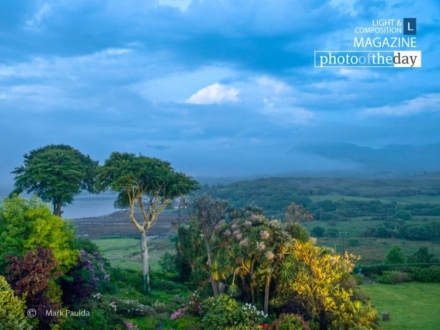
Mark Paulda has captured this quiet tension in his image titled Ballinakill Bay. He invites us to look at the Irish coastline not just as a scene, but as a space shaped by human hands. Does this view belong to everyone, or have we simply been invited to witness someone else’s private horizon?