
The Geography of Belonging
There is a peculiar detachment that comes with altitude. When we are on the ground, we are defined by the walls we build and the streets we navigate; we are subjects of the terrain, bound by the gravity of our own small corners. But from above, the world flattens into a map of intentions. We see the veins of the earth—the rivers and the roads—as if they were merely lines drawn on a page, and the density of human life becomes a pattern of light and shadow. It is a strange, quiet mercy to see things this way. It reminds us that our daily struggles, so loud and pressing when we are walking among them, are part of a much larger, silent rhythm. We are all just dots in a vast, interconnected tapestry, moving toward destinations we can only partially see. If we could always hold this perspective, would we still be so quick to claim our borders, or would we finally recognize the water that connects us all? What remains when the noise of the city fades into the hum of the clouds?
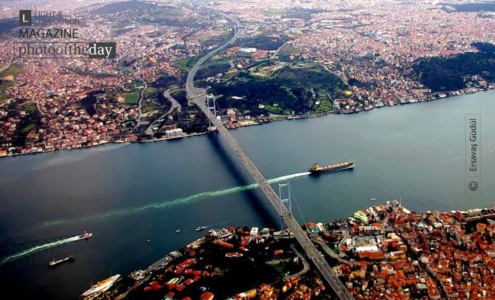
Ersavaş Güdül has captured this sense of distance in his work titled Bosphorus. It offers a rare, suspended moment where the weight of history meets the fluidity of the sea. Does this view make you feel smaller, or perhaps more connected to the world below?